What the Future Holds for Spatial Biology

Download

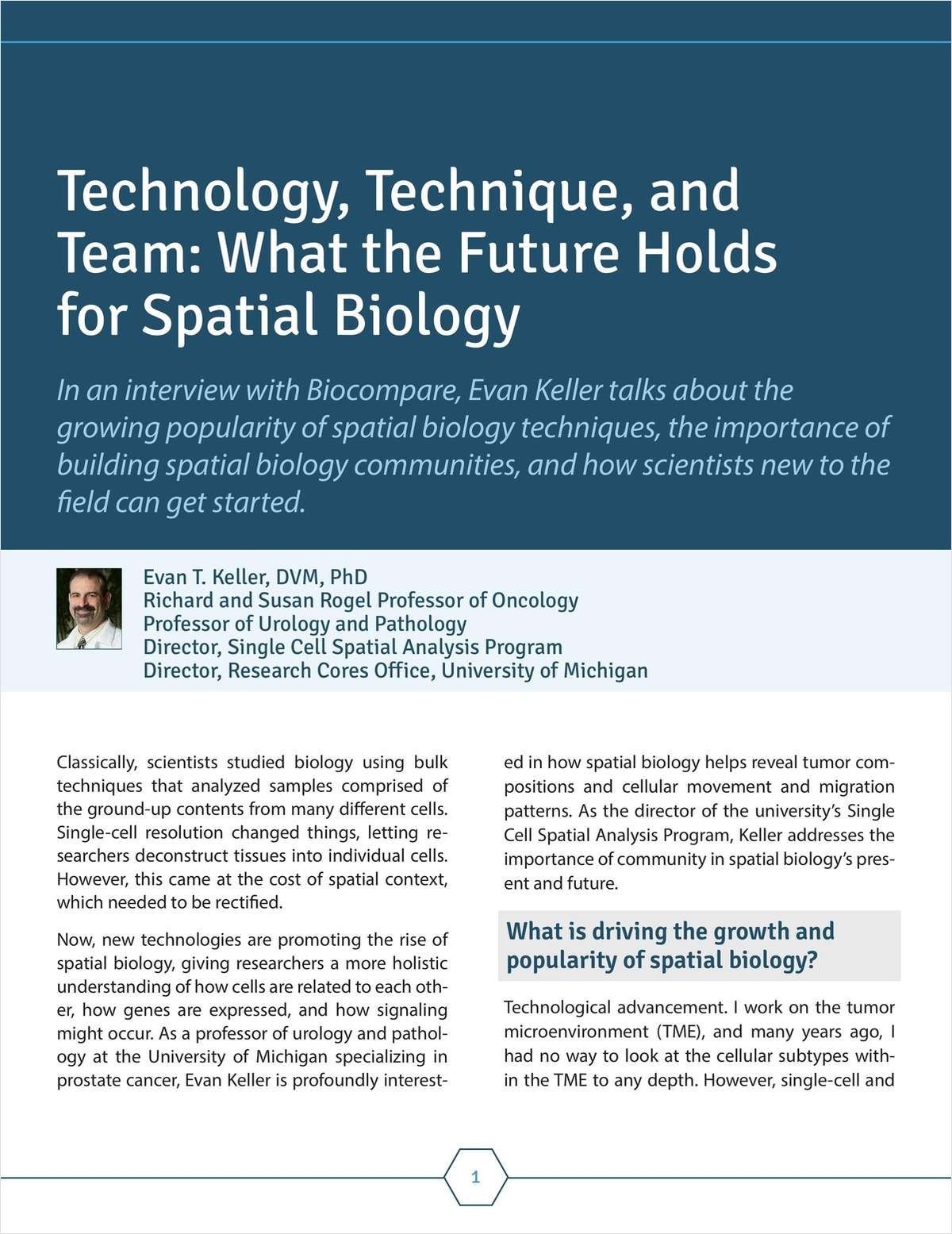
New technologies are promoting the rise of spatial biology, giving researchers a more holistic understanding of how cells are related to each other, how genes are expressed, and how signaling might occur. As a professor of urology and pathology at the University of Michigan specializing in prostate cancer, Evan Keller is profoundly interested in how spatial biology helps reveal tumor compositions and cellular movement and migration patterns.

In this article, Keller addresses the importance of the university’s Single Cell Spatial Analysis Program, as well as the value of community in spatial biology’s present and future.

FILL THE FORM BELOW


    By submitting this content request, I have legitimate interest in the content and agree that Bio-Techne | Leica | Biocompare, their partners, and the creators of any other content I have selected may contact me regarding news, products, and services that may be of interest to me.

    By downloading this content, you consent to Biocompare storing your email address and contact information and transmitting your contact information to the company that published the application note. You also agree to receive email from Biocompare and the sponsor. You may request to be removed at any time.

    © An Imprint of coreinteltech | All rights reserved | Privacy Policy