
How we're evolving Jira for AI-native software development
New Jira and Teamwork Graph capabilities help engineering teams plan, assign, govern, and measure work across humans and AI agents.
What AI-native software development means
The practical version is this: the SDLC needs to become legible to agents without becoming less accountable to humans.
That means three things.
- Intent has to be structured before work starts. An agent needs more than a prompt or a Jira summary. It needs the requirements, the relevant architecture, the decision history, and the constraints the team already knows.
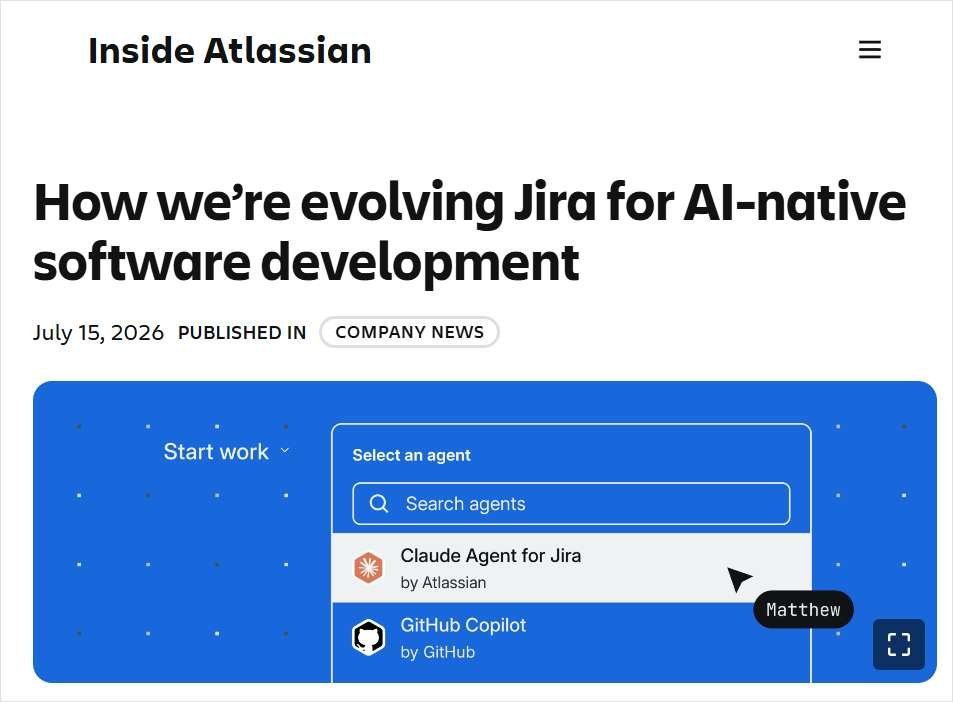
- Choosing the right agent should not create diverging processes. A team may use the Cursor IDE for web development, Claude Code for complex backend tasks, a custom agent running in a cloud sandbox for unique codebases, and Jira Coding Agent to automate routine fixes at low cost. The workflow should not fork every time the runtime changes.
- Autonomy has to stay observable. Agent sessions cannot disappear into terminals, tabs, or disconnected logs, with critical context trapped on local devices. Teams need to see what happened, who reviewed it, and which work item started it.
Do those three things together and the system changes. Agents stop operating like isolated copilots and start participating in the same SDLC as the rest of the team.
FILL THE FORM BELOW
© An Imprint of coreinteltech | All rights reserved | Privacy Policy